The back story
Kalamaki, gyros and the Sunday taverna: how Glyfada really eats, the back story
Kalamaki or gyros, pitta or plate, the 4am order and the Sunday taverna: Glyfada’s everyday table.
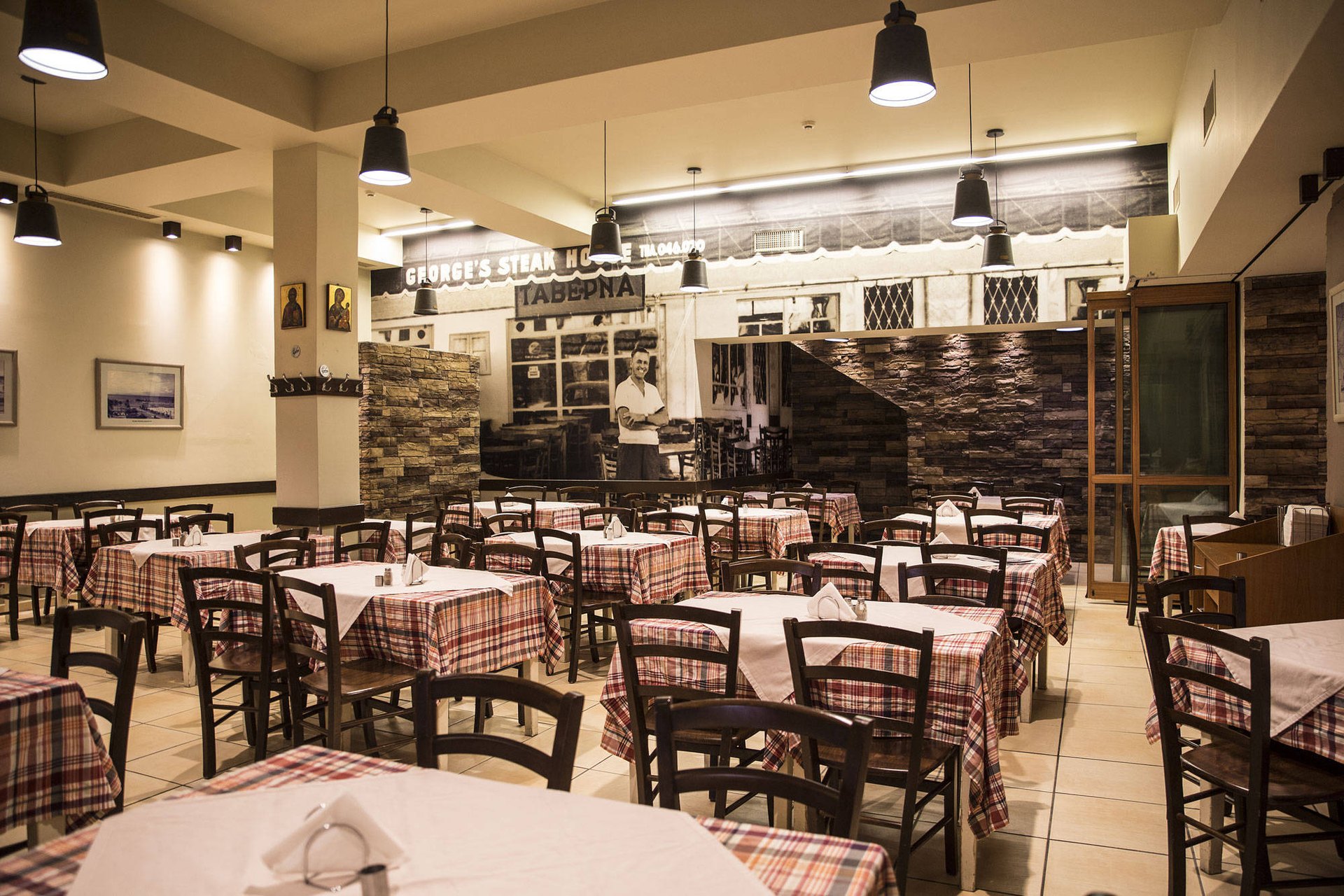
Photo Credit
Image courtesy of © George’s Steak HouseAsk anyone in Glyfada for the best souvlaki and you get an address, delivered with conviction. Behind the loyalty sits a habit as old as Homer and as current as tonight’s delivery: meat on a skewer over embers. Here is the local grammar of kalamaki, gyros, kontosouvli and biftekia, the late-night order, the Sunday family taverna and the fish table by the water, and why it matters to the people who live here.
Homer’s kalamaki
The recipe is older than the town. In Book 9 of the Iliad, Achilles carves the meat and threads it on spits, while Patroclus lets the fire burn down, spreads the embers, lays the spits across them and sprinkles the morsels with salt. Take away the armour and the visiting envoys, and that is a Friday night on Artemidos Street. Glyfada did not invent the souvlaki; it simply never saw a reason to stop.
What has changed is the vocabulary. On the menus here the skewer is the kalamaki, literally the little reed, and Trelos Gaidaros, Glyfada lists its pork kalamaki in pitta in plain Greek. Gyros is the other road: meat stacked on a vertical spit and shaved as it turns, which Souvlakia Livadia makes by hand. Every order then turns on one small question: in pitta, to eat on foot, or as a portion on a plate?
The grammar of the pitta
A good wrap is a piece of engineering: warm pitta, the meat and whatever the house adds, rolled tight in paper so it can be eaten walking. Livadia’s case rests on pitta that holds together until the last bite, and the line of locals outside on Andrea Papandreou at the usual hours suggests the case is won. Tsi Tsi, Glyfada takes the same idea to Angelou Metaxa, among the shop windows, for the shopping run that overran dinner.
Then come the bigger relations. Kontosouvli is souvlaki grown up: large chunks of pork turned for hours on a long spit. Biftekia, the Greek patties, are the grill’s other staple. O Roumeliotis on Himarras Street lists them in beef, chicken, pork and even mutton, sells its meat by the kilo, and makes a persuasive argument that a Sunday lunch can be ordered rather than cooked.
After midnight
The late order keeps its own timetable. Trelos Gaidaros, Glyfada, the ‘Crazy Donkey’ on Artemidos, says its meat goes onto the charcoal at the moment you order, and on Fridays and Saturdays its delivery hours run to 4am. The menu commits to the joke: there is gaidouropsomo, donkey bread, and a dish called samari, the pack saddle. The donkey itself, mercifully, is not on it.
Further south, O Takis, Vouliagmeni is the honest alternative in a town better known for yacht lunches: a family-run grill house on Agiou Panteleimonos, famous for fluffy, well-seasoned kebabs over charcoal. Why does a suburb this comfortable still queue for food wrapped in paper? Because the grill is the one table the whole town shares, and nobody can tell the schoolboy from the shipowner by the wrapper.
The grill is the one table the whole town shares, and nobody can tell the schoolboy from the shipowner by the wrapper.
The Sunday table
Sunday is a sit-down affair, and it belongs to the taverna. O Proedros keeps a courtyard under plane trees, away from the main streets; To Drami, on Glyfada’s food street, mixes modern and traditional with dishes from all over Greece, homemade meatballs among them. George’s Steak House began in 1951 as a small butcher’s shop, added an open-air grill two years later, and gave the area its nickname: Biftekoupoli.
The house’s own count is 412,871 biftekia a year, now served by the fourth generation of the family. The meat is chosen in person from producers and laid out in a glass cabinet, so you point at your cut. On a coast this devoted to the sea, it is a reminder that a recipe repeated across four generations is not nostalgia; it is quality control.
Fish by the water
When the occasion calls for the sea, residents head for the bays. Garbi has served Kavouri since 1924 with recipes passed down through generations; Panorama, a few doors along, is in its third generation; and Labros in Vouliagmeni keeps the marble slab recording the first café-restaurant there, in 1889. The order is Homer’s, give or take a fish: something fresh from the grill, with salt.
Closer to home, Barbounaki’s Glyfada branch runs on the motto ‘quality fish for everyone’, and Sardelaki, named for the humble sardine, is the busy seafood taverna where booking ahead is wise. Between them they settle the question that matters to people who live here: whether a fish supper can be a weekday habit rather than an event. In Glyfada, it can.
Our advice: keep a takeaway number for the week, a taverna for Sunday and a bay for birthdays. Order kalamaki in pitta when you are walking and a portion when you are staying, ask the fish taverna what came in that morning, and remember that Glyfada eats late: the queue at 11pm is not a crisis but a schedule.
Why it's on our list
- Homer’s kalamaki
- The grammar of the pitta
- After midnight
- The Sunday table and the sea
Location
The map comes from Google Maps, which sets its own cookies once it loads.
More in depth
 The back storyRed mullet, marble and the meatball city: Glyfada at the table, the back storyFrom ancient Aixone’s red mullet to MICHELIN stars in Vouliagmeni: how the Riviera learned to dine.
 The back storyFrappé, freddo and a refugee’s carioca: Glyfada’s café life, the back storyIced coffee born by accident, a Thracian sweet shop and pies baked before you: Glyfada’s cafés.
 The back storySunsets with a bassline: the Riviera’s beach clubs, the back storyClifftops, coves and sundowners: how the Riviera’s summer nights moved down to the sea.