The back story
Four basins and a fishermen’s mole: the Riviera takes to the water, the back story
From an ancient harbour road to superyacht berths: how the Athens Riviera built its marinas.
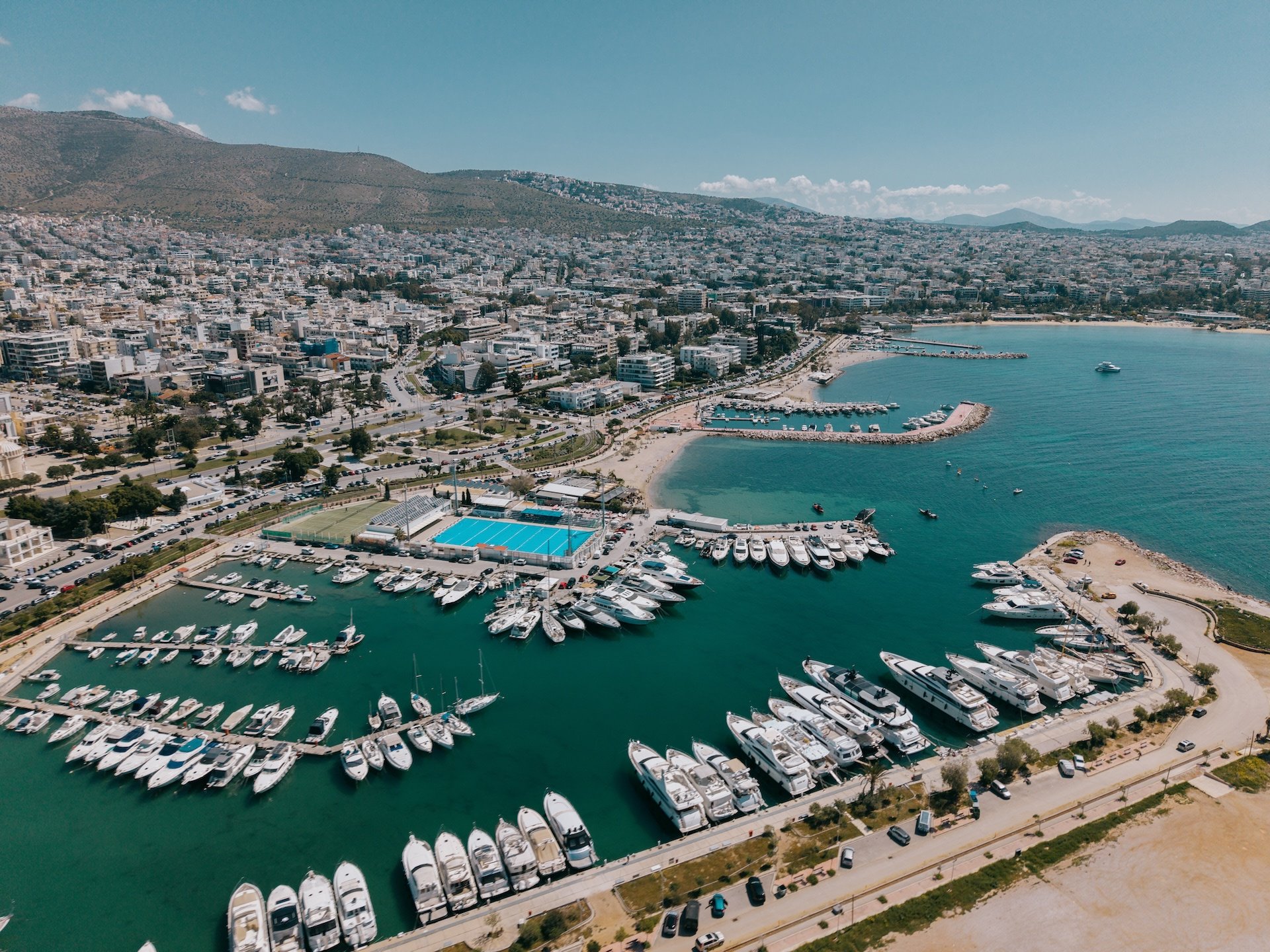
Photo Credit
Image courtesy of © Athens SailingThe Aixonians kept a harbour here 2,500 years ago, and a stretch of their carriage road to the sea was dug up in 2013. Today the Riviera runs from Glyfada’s four municipal basins to Alimos, one of the largest marinas in the Mediterranean, and a rebuilt Astir Marina with fewer, bigger berths. Here is how the coast took to the water, and where to step aboard.
An ancient road to the harbour
Boats are nothing new on this shore. Glyfada’s municipal history places the harbour of ancient Aixone in the bay north of the Punta headland. A little further south, works on Megalo Kavouri beach in 2013 uncovered 300 metres of an ancient carriage road, built to link the centre of the deme of Halai Aixonides with its harbour on that very beach.
The road ran east to west along a gentle hillside, held between two retaining walls, before turning south to end at today’s shoreline. So when the Riviera’s yachts nose out each morning, they are following an ancient commute. The difference is the cargo: fewer amphorae, more ice buckets.
Glyfada’s four basins
Glyfada’s marina is not one harbour but four small basins strung along the seafront. The municipality gives their capacity as 146 boats in the first, 94 in the second, 253 in the third and 259 in the fourth, for vessels of up to 35 metres. The 3rd Marina Glyfada also hosts the summer stage of the Glyfada Festival, and visiting skippers must arrange a temporary berth at least ten days ahead.
It is a working, walkable marina, minutes from the shops, and many day boats leave from here. Athens Sailing runs its Lagoon 45 catamaran and motor yachts from Marina Glyfada. Ten minutes north, Alimos Marina is the giant of the coast: one of the largest marinas in the Mediterranean, with 1,100 permanent berths and room for up to 600 boats in winter storage, and the main base for sailing charters to the islands.
Clubs built by hand
Much of the Riviera’s sailing life was made by residents rather than developers. The Nautical Athletic Club of Voula traces its first small harbour to 1950, built on the initiative of local people, with their own money and their own labour, on land rented from the state. It now has room for about 60 small boats and RIBs and some 35 offshore yachts.
The club’s grounds now cover about 11 stremmata, roughly 11,000 square metres, and over the decades it has organised competitions in fishing, swimming, underwater sports and sailing. Its boats race both round the buoys and offshore, which is quite a career for a harbour its founders built with their own hands.
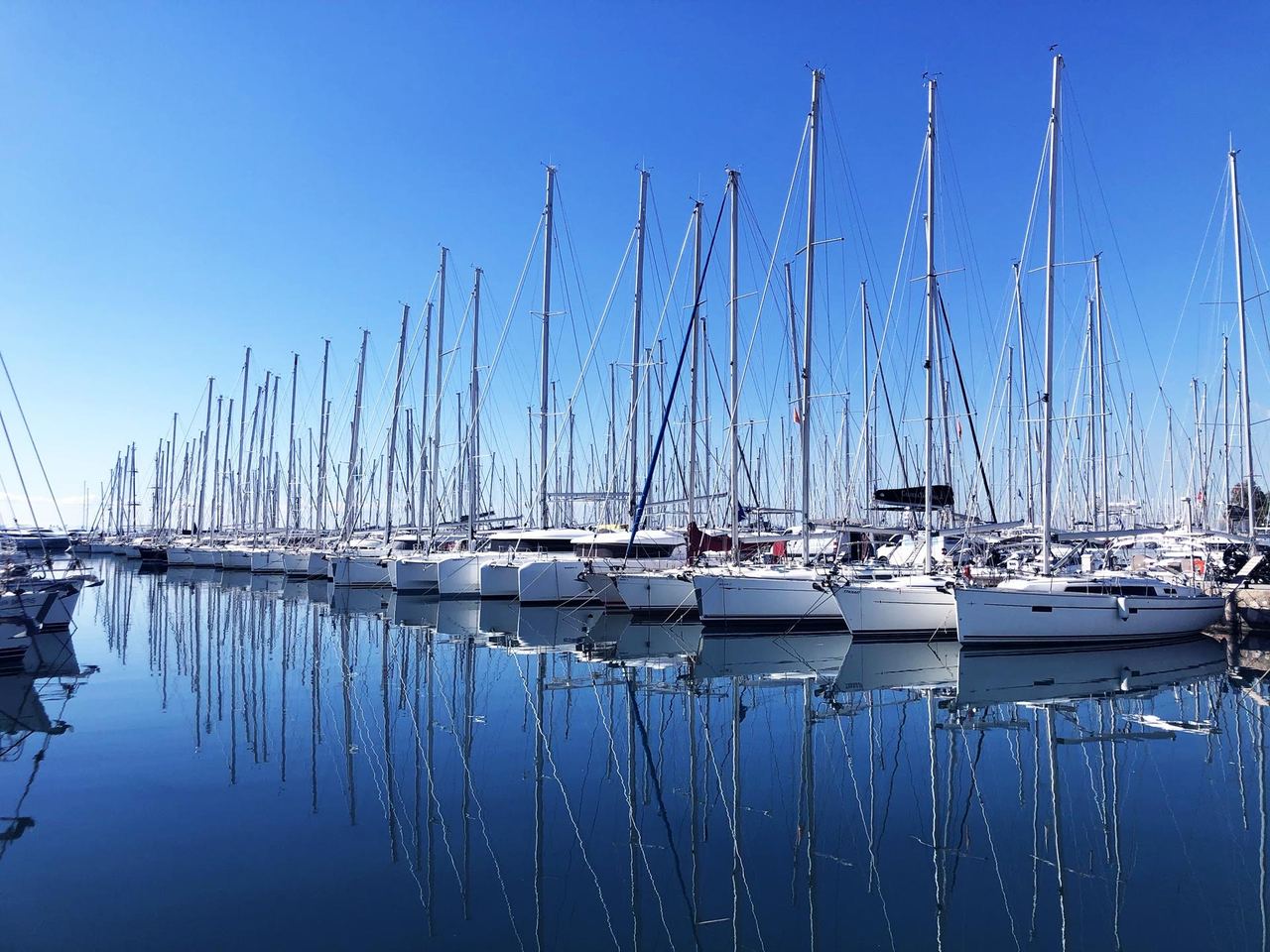
Photo Credit
Image courtesy of © Alimos MarinaThe Vouliagmeni Nautical Club, a non-profit club since 1937, teaches about 1,000 children a year across eight water sports and keeps a collection of more than 1,000 cups. At the southern end, Varkiza fishing harbour was built in 1980; its 116 moorings serve some 70 professional fishermen who, the municipality says, have headed out each afternoon for eight decades.
The marina got smaller in number and larger in ambition: the superyacht economy in one line.
Bigger boats, fewer berths
The newest chapter is about size. Astir Marina Vouliagmeni was built in the 1960s as part of the Astir tourist zone, created in 1955 on the Laimos peninsula. Its rebuild, due for completion in 2022, was planned to take 59 yachts instead of the 103 it held before, including superyachts and one berth for a yacht over 70 metres. The marina got smaller in number and larger in ambition: the superyacht economy in one line.
Up the coast at Palaio Faliro, Flisvos Marina has 310 berths, more than half of them for yachts over 30 metres. Between Flisvos and Varkiza, then, the Riviera holds the whole maritime spectrum: the fishing caique, the club dinghy, the charter catamaran and the floating villa. Which is the true Riviera? The one that still makes room for all four.
Our advice: walk the Glyfada basins at dusk, when the boats come home; book a day sail from Glyfada or Alimos well ahead for July and August; and come to Varkiza harbour early in the morning to see what the night’s fishing brought in.
Why it's on our list
- An ancient road to the harbour
- Glyfada’s four basins
- Clubs built by hand
- Bigger boats, fewer berths
Location
The map comes from Google Maps, which sets its own cookies once it loads.
More in depth
 The back storyLeto’s girdle and Poseidon’s cape: the Riviera’s ancient coast, the back storyA temple found by playing orphans, a sunken lake and a turtle hospital in train wagons.
 The back storyCoupons, kickstands and Kyprou Street: how Glyfada learned to shop, the back storyFrom farmland and land-for-coupons to Kyprou Street: how Glyfada became the Riviera’s high street.
 One of Europe’s largest regenerationsThe Ellinikon: a new city on the old airportOn the site of the old Athens airport, by the sea at Elliniko, a new coastal district is rising.