The back story
Leto’s girdle and Poseidon’s cape: the Riviera’s ancient coast, the back story
A temple found by playing orphans, a sunken lake and a turtle hospital in train wagons.
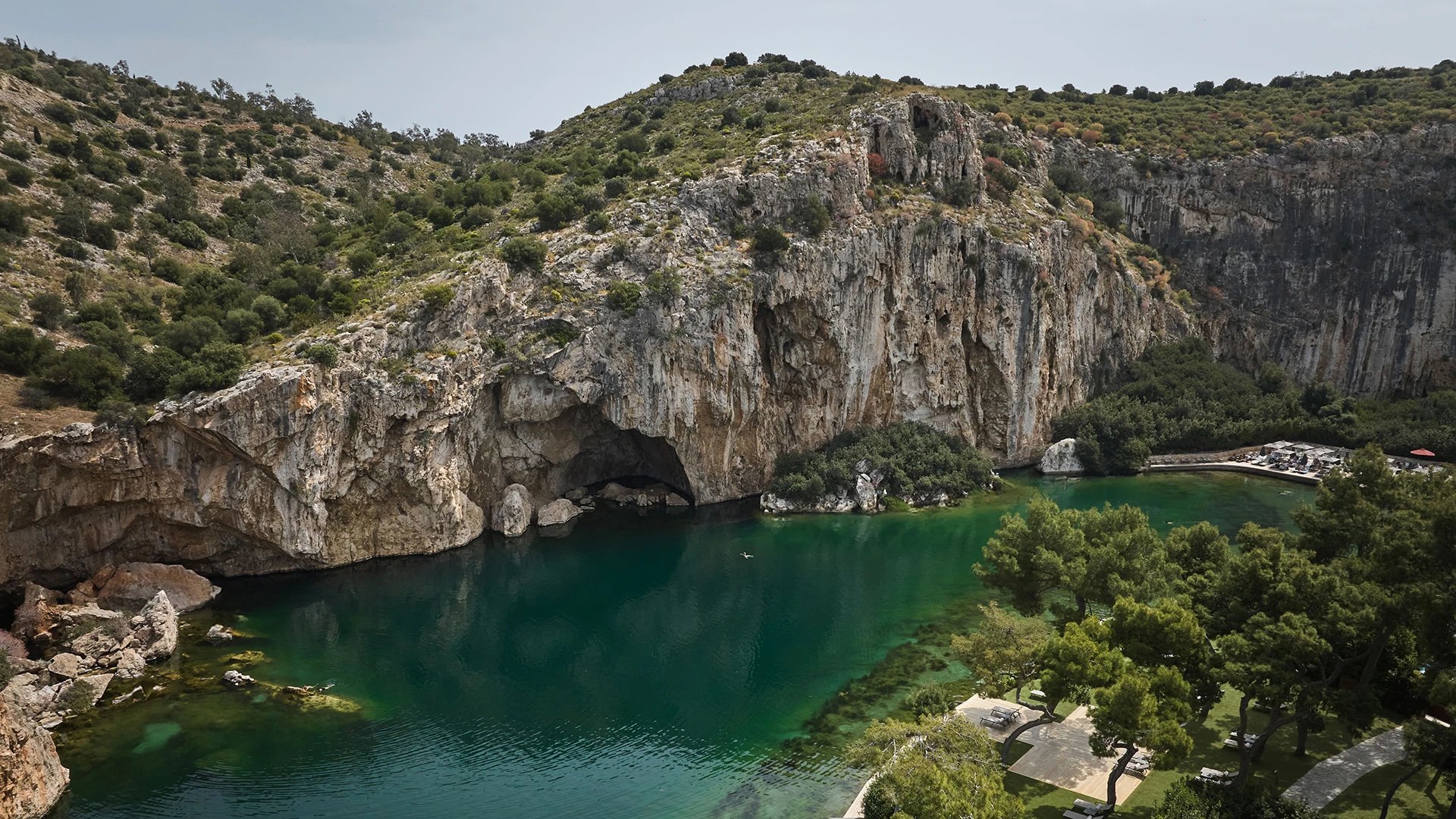
Photo Credit
Image courtesy of © Lake VouliagmeniThe Athens Riviera looks like a modern playground, but scratch the sand and antiquity answers. A temple was found by orphans at play, a 2,500-year-old road surfaced under a beach, a lake took its name from the ground that sank, and a turtle hospital moved into old train wagons. Here is the back story of the coast’s sights, from Glyfada to Sounion.
A goddess loosens her girdle
The most famous temple on this stretch was found by children. The Temple of Apollo Zoster, the main sanctuary of the ancient deme of Halai Aixonides, came to light when children from the Vouliagmeni orphanage, playing in the sand, uncovered walls and inscriptions. Few archaeological sites can say they were discovered by a game.
Excavations followed in 1926–1927. They confirmed the ancient writers, among them Pausanias, who told how Leto, pursued by an angry Hera and about to give birth to Apollo and Artemis, loosened her girdle, her zoster, at this spot. The sanctuary was linked directly to Apollo’s great shrine on Delos.
Pausanias wrote of a sanctuary here to Apollo, Artemis and Leto, and the excavation proved the old texts right about the place. It is a rare thing on a modern holiday coast: a myth with a map reference. The temple’s remains sit right beside Astir Beach, so a swim and a pilgrimage can share the same towel.
Hilltop villages and a harbour road
Inland, Lathouriza Hill rises 132 metres above the sea. On its eastern brow, excavated in the summer of 1939, lie 25 houses of a settlement from the late 8th to the 6th century BC, and a circular shrine 7.75 metres across, rich in offerings. Three boundary stones cut into the rock, from the 2nd century AD, still mark the land of the Zoster sanctuary.
Down on the shore, works at Megalo Kavouri in 2013 uncovered 300 metres of the Ancient harbour road, Megalo Kavouri: a carriage road that linked the centre of the deme with its harbour, held between two retaining walls. Holidaymakers now walk to the same beach by a different route, carrying lighter loads.
The sunken lake
Vouliagmeni itself is named after a geological event. The town’s name comes from its lake, formed when the ground collapsed in the distant past; vouliagmeni means “sunken”. Lake Vouliagmeni lies under a limestone cliff, and the municipal tourism portal gives its water as 21°C to 29°C, warm enough for winter swimming, with small fish that nibble at bathers’ skin.
Few archaeological sites can say they were discovered by a game.
Turtles, golf and Poseidon
In Glyfada, the Archelon Sea Turtle Rescue Centre has worked by the sea since 1994, founded with the support of the municipality and the environment ministry. Archelon calls it one of the first sea turtle rescue centres in the Mediterranean and the only one in Greece. Part of it is housed in old train wagons from the Hellenic Railways: a hospital where the patients are slow and the wards once ran on time.
About 70 injured or sick turtles arrive each year, and about 30 return to the sea after treatment, while more than 10,000 visitors and more than 10,000 students tour the centre. A short drive away, the Glyfada Golf Course was built by the Greek National Tourism Organisation; its club was founded on 20 April 1966 by 198 people, and the course has hosted the World Cup in 1979 and the Mediterranean Games in 1992.
The club calls itself the oldest golf club in Greece and the largest by membership; before the Glyfada course existed, its founders played on a small course at Varybobi or went abroad. It still runs academies for children and adults, so the Riviera produces golfers as well as sunburn.
And at the tip of Attica stands the Temple of Poseidon, Sounion. Greece’s official tourism site dates it to the 5th century BC and tells the myth of King Aegeus, who threw himself into the sea here on seeing black sails, giving the Aegean its name. Romantic poets carved their names into its marble, a practice that is very much forbidden now.
Why does a coast this old feel so new? Because most of it was built over in a single century, and its antiquities hide in plain sight: beside a beach, under the sand, on a hill above the villas. Our advice: pair Lake Vouliagmeni with a walk past the Zoster temple at Astir Beach, book the turtle centre ahead, and drive to Sounion for sunset.
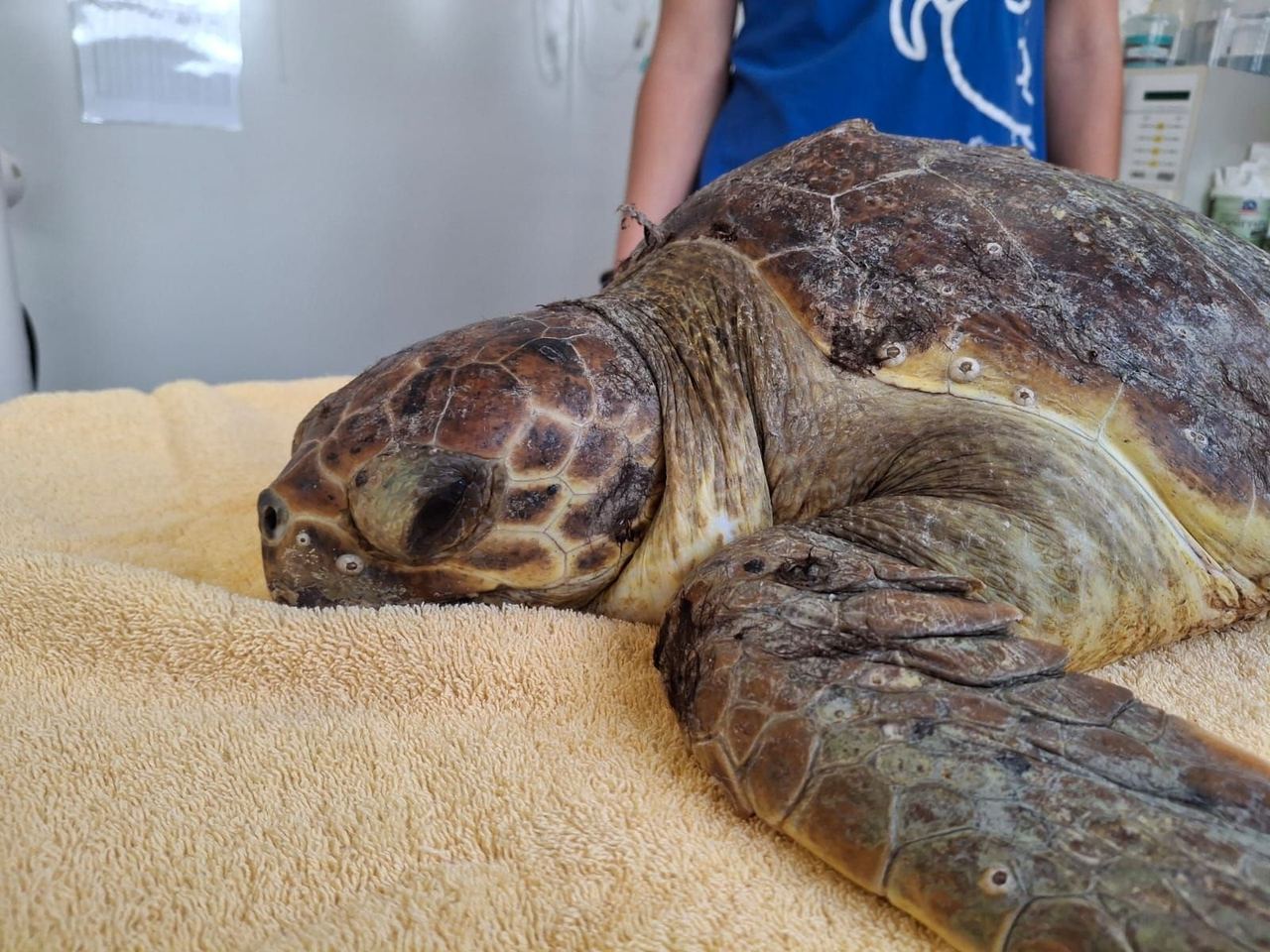
Photo Credit
Image courtesy of © ARCHELONWhy it's on our list
- A goddess loosens her girdle
- Hilltop villages and a harbour road
- The sunken lake
- Turtles, golf and Poseidon
Location
The map comes from Google Maps, which sets its own cookies once it loads.
More in depth
 The back storyCoupons, kickstands and Kyprou Street: how Glyfada learned to shop, the back storyFrom farmland and land-for-coupons to Kyprou Street: how Glyfada became the Riviera’s high street.
 One of Europe’s largest regenerationsThe Ellinikon: a new city on the old airportOn the site of the old Athens airport, by the sea at Elliniko, a new coastal district is rising.
 The back storyLife beside the old runway: how The Ellinikon will live, and what it means for GlyfadaPark, beach, sport, schools and transport: daily life at The Ellinikon, and what it means next door.