The back story
Six rings and a Saarinen roof: the old airport’s jet-set years, the back story
Olympic’s six rings, a Saarinen terminal and a Riviera that dressed for arrivals: the airport years.
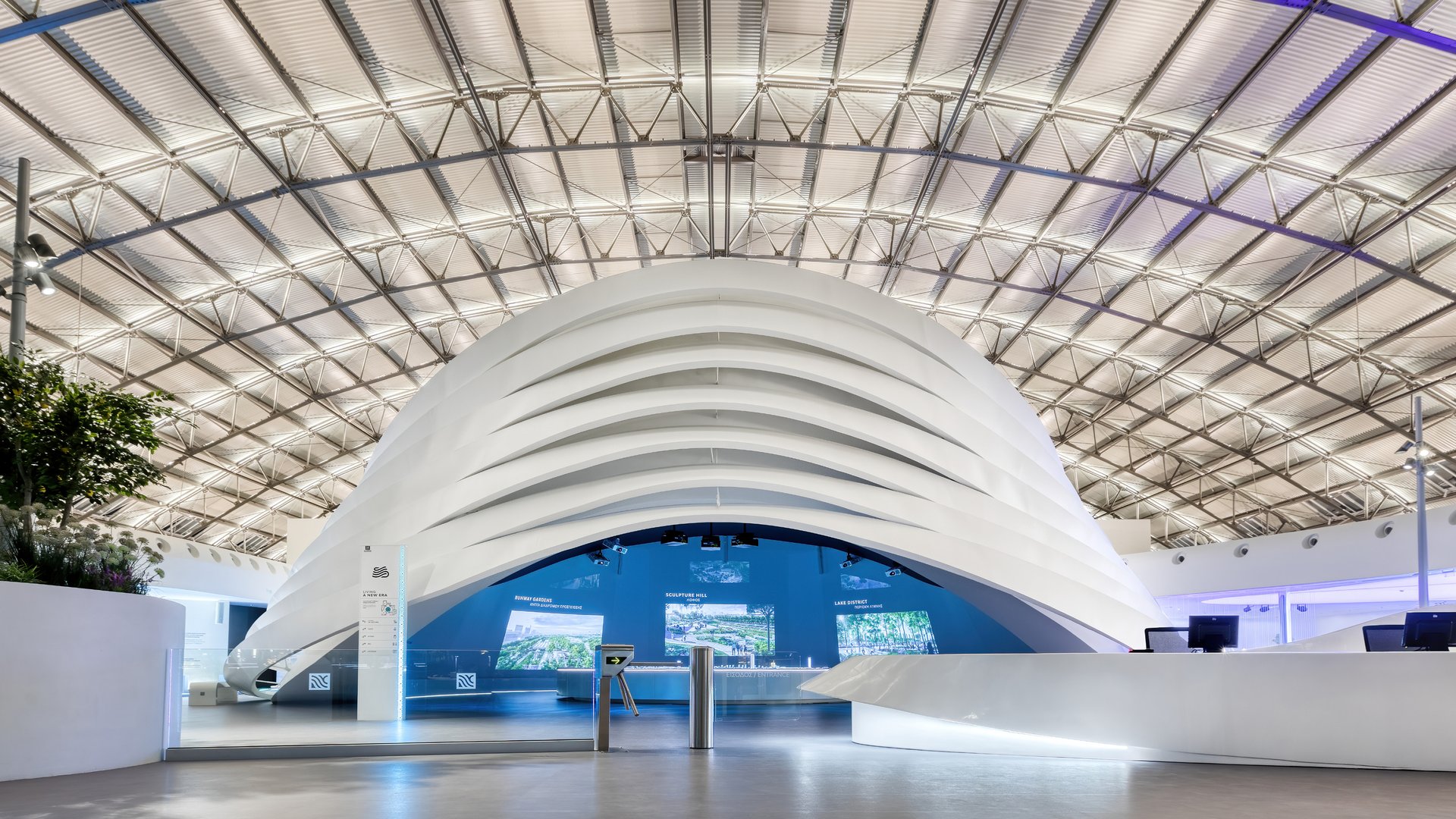
Photo Credit
Image courtesy of © The EllinikonFor sixty years Athens met the world at the end of Glyfada’s streets. The airport by the sea gave the city a Saarinen terminal, a national airline in uniforms by Chanel and Pierre Cardin and a Riviera that learned to dress for arrivals. Here is how the jet age landed beside Glyfada, what it gave and what it took, and what the old runway is becoming now.
A runway by the sea
It began as a strip of land between Hymettus and the Saronic Gulf. Construction of the airport started in 1938, with a single 1,800-metre runway on land expropriated from the communities of Komninon and Hellinikon. In 1950 a second runway of 2,250 metres followed. For the next half century, anyone flying into Athens touched down within sight of the sea.
Glyfada was already a seaside town by then. Its first houses went up in 1920 and the beach soon turned it into a bathing resort; the municipality’s archive shows the historic Trouville building serving as the town hall in 1950. The war had been hard on the neighbourhood nearest the field: the whole Vosporos quarter was destroyed by bombing because it sat beside what was then a small military airfield.
Olympic and the six rings
The airport’s glamour years belong to one airline. The shipowner Aristotle Onassis took over the national carrier and renamed it Olympic, after, the Museum of Tourism records, the flag of his shipping fleet. Its six rings stood for the five continents it served and Greece. Few airlines have asked Paris to dress the cabin: the crew wore uniforms by Chanel and Pierre Cardin, as well as by the Greek house Tseklenis.
The company grew wings of every size. In 1971, the Onassis Foundation’s archive notes, Olympic Airways set up a subsidiary, Olympic Aviation, for light aircraft and helicopters. At Hellinikon the airport ran two terminals, the West Terminal for domestic flights and the East Terminal for international ones, while a third served the American military base on the site.
Saarinen’s last terminal
The East Terminal is the airport’s architectural signature. It was designed by the Finnish-American Eero Saarinen and inaugurated in 1969. Saarinen died in 1961, so the terminal opened as an architect’s last word, delivered eight years after he had stopped speaking. The Canadian Centre for Architecture keeps 146 drawings and 51 photographs of the study models, dated 1960 to 1969.
The airfield kept growing. In the 1970s the main runway was extended to 3,500 metres. Growth had a price next door. Glyfada’s refugee families of Vosporos had worked as traders, merchants and labourers for the expanding airport; around 1967, the municipality records, many were evicted to make room for its extension, with only a small compensation, and became refugees for a second time.
Saarinen died in 1961, so the terminal opened in 1969 as an architect’s last word, delivered eight years after he had stopped speaking.
The Riviera dresses for arrivals
Down the coast, the Riviera prepared for its new visitors. The Astir Palace opened on its pine-covered Vouliagmeni peninsula in August 1960, designed in 1958 by Emmanouel Voulekas, Pericles Sakellarios, Konstantinos Dekavallas and Prokopis Vasileiades. Its beach acquired the kind of guest list that does a coast’s marketing for it: the municipal tourism portal records that Brigitte Bardot swam there.
Glyfada built itself a fairway beside the runway. Glyfada Golf Course was created by the Greek National Tourism Organization, and the Glyfada Golf Club, the oldest in Greece, was founded on 20 April 1966, when 198 members of Athenian society signed to found it. The airport’s own site survey still records the golf course as its southern neighbour, the only place in town where a slice was the quieter thing in the sky.
The town filled in around them. A luxury villa of 1958 stood where the 3rd Marina Glyfada is today, and Upper Glyfada, the Terpsithea district, only began to develop after 1960, on land where sheep had grazed. Was Glyfada made by its airport? The municipality’s own history credits the beach first; the airport, as its archive shows, gave work, took homes and put the town on the way in from the rest of the world.
After the last flight
By the 1990s the airport was handling around 10 million passengers a year, and in 2001 it closed as the new Athens International Airport at Spata opened. The aviation buildings fell quiet, but not for good. One renovated hangar now houses The Ellinikon Experience Centre, which traces the site’s history alongside its future.
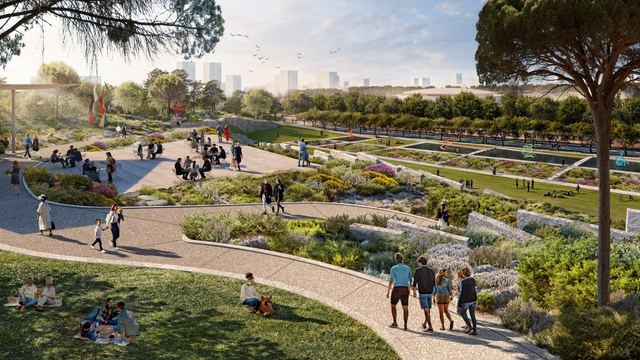
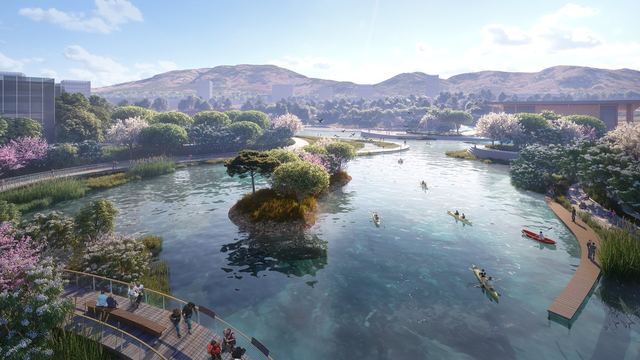
Around it, The Ellinikon Park is in progress on 2 million square metres, with the Ellinikon Experience Park already open and the first phase of The Ellinikon Sports Park opened in August 2026. The park’s plans even name a Saarinen Lawn. It seems fitting that a place built for leaving is being remade for staying.
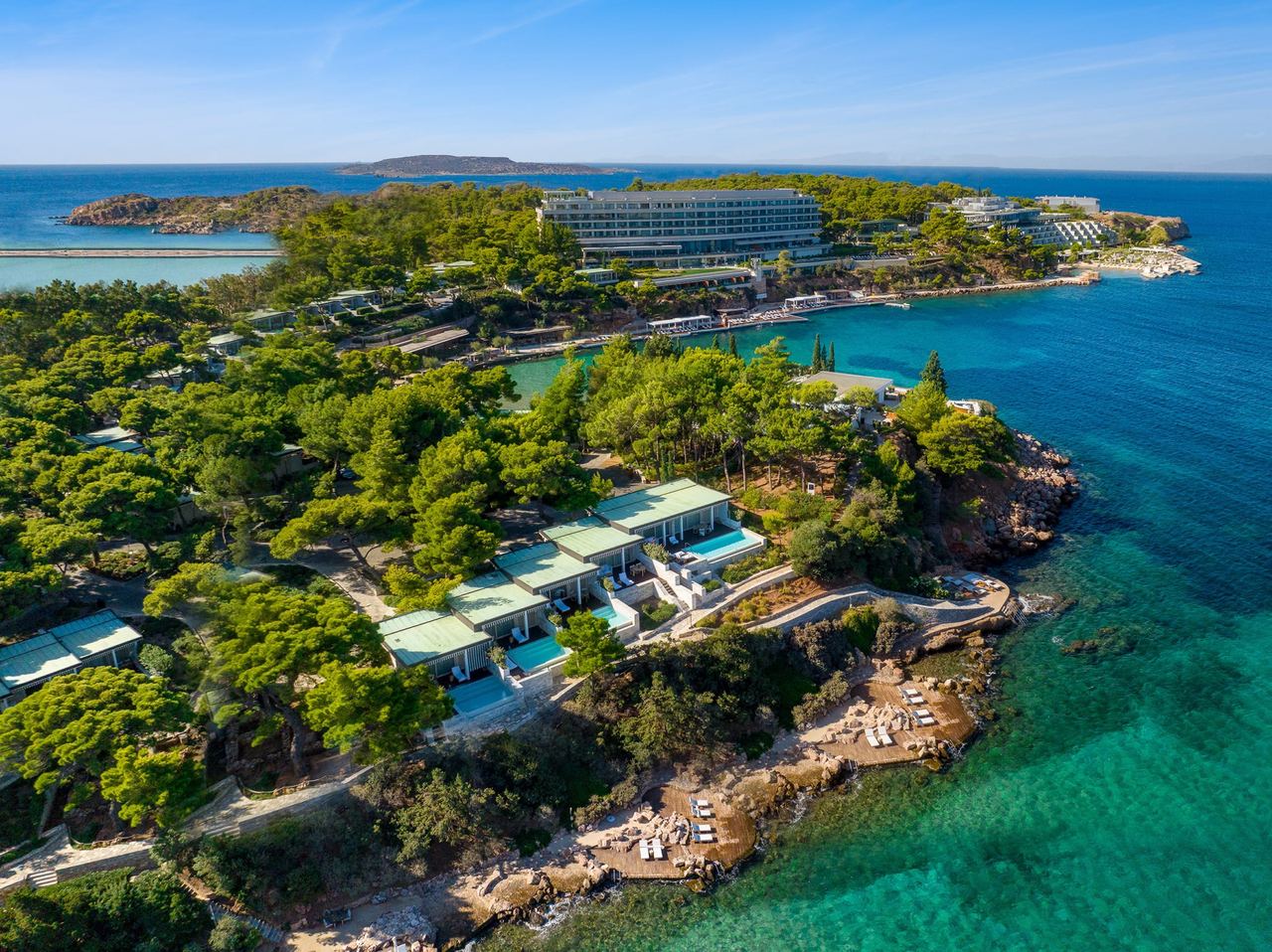
Photo Credit
Image courtesy of © Four Seasons Astir Palace Hotel AthensOur advice: book a visit to The Ellinikon Experience Centre to see the airport’s story told inside one of its own hangars, then walk the Experience Park, where the old airfield is learning to grow trees.
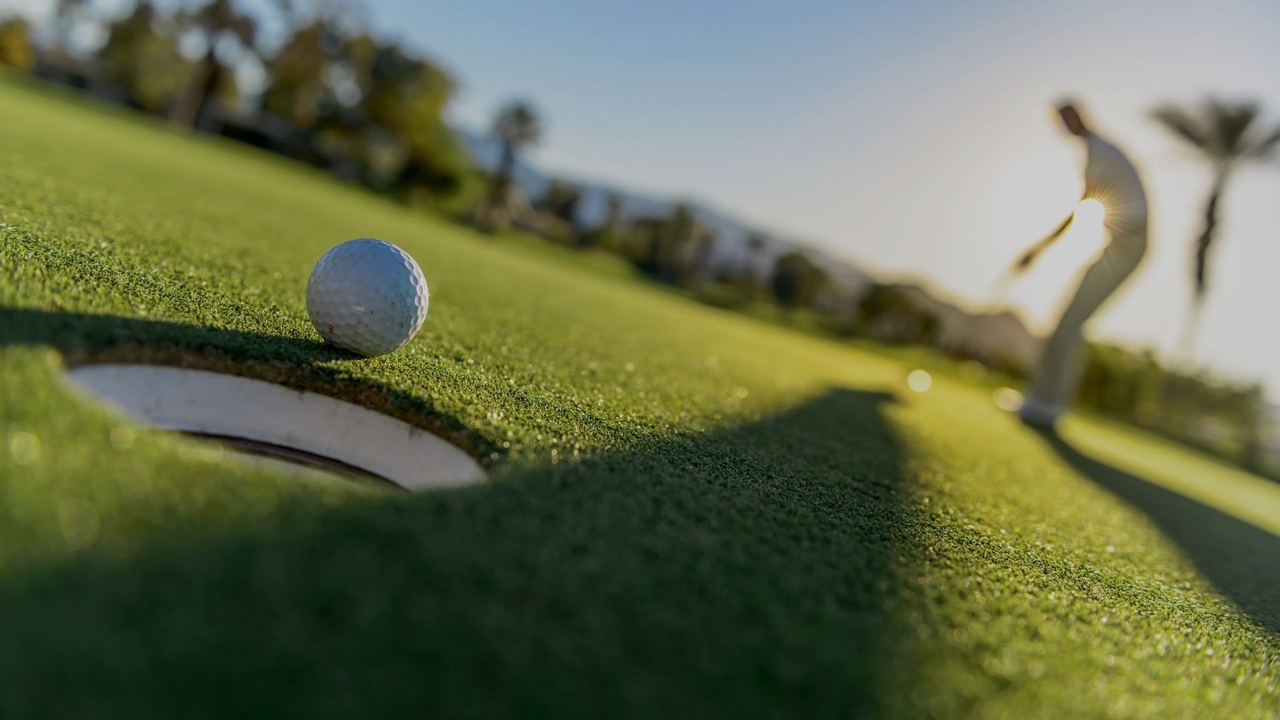
Photo Credit
Image courtesy of © Glyfada Golf ClubWhy it's on our list
- A runway by the sea
- Olympic and the six rings
- Saarinen’s last terminal
- The Riviera dresses for arrivals
Location
The map comes from Google Maps, which sets its own cookies once it loads.
More in depth
 One of Europe’s largest regenerationsThe Ellinikon: a new city on the old airportOn the site of the old Athens airport, by the sea at Elliniko, a new coastal district is rising.
 The back storyLife beside the old runway: how The Ellinikon will live, and what it means for GlyfadaPark, beach, sport, schools and transport: daily life at The Ellinikon, and what it means next door.
 Coming soonComing soon: the tech the makers have promisedOfficially announced tech, from Gemini glasses to Meta's VR specs, plus the newest arrivals.